Beginner’s Guide to Crisis Management Training for Security Guard Success
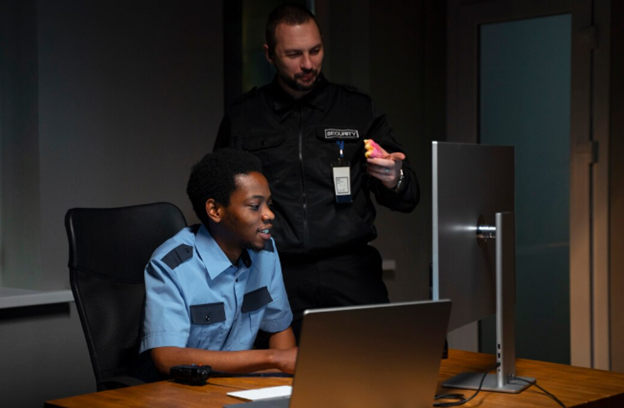
It’s exhilarating to start your career as a security guard. People will depend on you to help keep them safe in this new job. But you have to be cool even when things are hard because of that duty. That’s when crisis management training comes in. You might not have an official certification yet, but knowing the essentials before you go to class will help you get ahead. It can also make you feel better about going to the training room for the first time.
What Is Crisis Management Training?
Future security guards learn how to deal with emergencies in crisis management training. Emergency situations can be small, like a noise problem, or big, like a disaster that affects a lot of people. The goal is clear: find out what to do, who to tell, and how to do things the proper way.
When you take the formal certification course, you will learn all the details in your state-mandated classroom training. But getting a “heads-up” before you get there makes it easier to understand and remember everything.
Why Crisis Management Matters for Security Guards
You might not know what each day would bring as a security guard. One day could be calm and slow. You might need to make quick judgments and think clearly the next day. When things go wrong, people seek you for help.
Thus, here are a few reasons why crisis management is so important:
- It helps you do something instead of freaking out.
- It teaches you to follow rules, even while you’re feeling strong emotions.
- So, it gives you a plan to follow, which helps you feel more sure of yourself.
- It gets you ready for the unexpected.
You can feel like you’re already part of the professional world of security just by understanding the basics.
Situational Awareness and Post Orders
A lot of people think that crisis management is just about keeping an eye on your surroundings. Situational awareness is vital because it lets you see a threat before it becomes worse. You learn to notice things like behavior, lighting, exits, and crowds.
But here’s the most important thing: situational awareness isn’t everything.
Written instructions from the employer, called “post orders,” must be followed by security guards. These orders tell you what you can and can’t do in an emergency.
For instance:
You might be able to see everything well if you see a robbery. If your post instructions read “Do not leave your post for any reason,” nevertheless, you shouldn’t chase the suspect. You should instead:
- Call 911
- Give the description of the suspects
- Share the direction they ran
- Tell us if any weapons were used
Your job is to keep the people and property in your area safe. Further, it is one of the best things you can do is know your post orders.
Communication During a Crisis
Being able to talk to others is one of the most critical abilities for managing a crisis. When you take your certification course, you will learn more about how to communicate officially. But it helps to know why communication is so important before you go to that class.
When there is a crisis, it can be hard for people to understand what’s going on. People might not know what to do. A calm, clear voice can make a big difference. To make sure the right people get the right information, like bosses, police, or emergency workers, good contact is also needed.
Even if JumpStart Security Guard Training and Safety Tips does not teach hands-on communication techniques, we help you understand why they matter. Learning a skill in class is a lot easier when you know what it is for.
Emergency Response Basics You Will Learn Later
Some pupils are anxious when they find out that emergency response includes things like first aid or other specific tasks. But you don’t have to know these things before you start your official course.
JumpStart Security Guard Training and Safety Tips does not teach how to do first aid, CPR, or other physical things. Those items are taken care of by certified instructors in training programs that have been approved. You can find out what will be covered ahead of time, so you feel ready.
Decision-Making Under Pressure
As a security guard, you might not have a lot of time to think. The objective of crisis management training is to help you make good choices quickly.
Moreover, you will find out that:
- First and foremost, safety
- Following procedures protects you and others
- You are never alone; you can always find the right support
Further, you spend less time thinking and more time doing the right thing when you know what’s expected of you.
Building Confidence Before the Classroom
Being ready gives you confidence. A lot of new security guard students are worried about long tests, hard rules, and new information. So, if education was never easy for you, this could be even harder.
JumpStart Security Guard Training and Safety Tips was made to help students:
- Learn at their own speed
- Learn about the subjects before you pay for class
- Feel confident walking into certification training
- Reduce the chance of failing and paying again
So, being prepared gives you an advantage that others may not have.
Your Future in Security Starts with Preparation
A career in security can open the door to many opportunities. But, like in any job, you have to understand the essentials to be successful. Crisis management training gives you the basic skills you need to keep other people safe and deal with situations without fear.
You don’t have to wait until the first day of class to start studying. You may start today, at your own pace, from the comfort of your own home.
Before you pay for official training, JUMPSTART SECURITY GUARD TRAINING Book by E.A. Riddick gives you all the information you need to feel prepared and knowledgeable.
Look into JumpStart Security Guard Training and Safety Tips right now if you really want to become a security guard and make sure you pass the training that the state requires. You deserve the greatest start possible in your future career in security, and the knowledge you receive here will help you get there.